

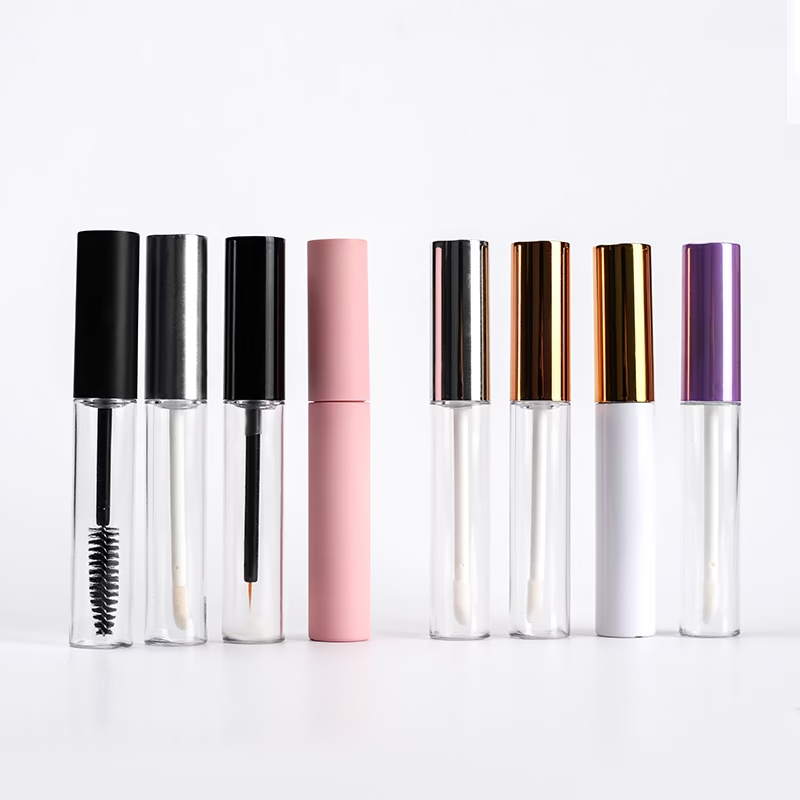
A mascara tube is far more than a container for a cosmetic formula. It is often one of the first physical touchpoints between the customer and the product. Its shape, weight, surface finish, brush, wiper and closure all influence how consumers perceive and use the mascara.
When sourcing mascara tubes, appearance should not be the only consideration. The right packaging needs to support your brand positioning, target audience, product claims, formula characteristics, target price and available budget. A tube that works for an affordable mass-market mascara may not be suitable for a premium professional line.
This guide explains how to evaluate custom mascara tubes from four key perspectives: visual and tactile experience, functional components, materials and finishes, and the appropriate level of customization.
Step 1: Define Your Brand Positioning Before Choosing Mascara Tubes
Clarify your product positioning before requesting samples from a mascara tube manufacturer. This helps you avoid selecting an attractive package that does not match your price point, target customer or brand identity.
Mass-Market or Value-Driven Mascara
The main goals in this segment are accessibility, dependable performance and cost control. Customers generally expect practical packaging and a consistent application experience rather than elaborate luxury details.
Key packaging priorities include:
- Reliable sealing and smooth opening and closing
- Stable product pick-up and application
- Controlled packaging cost
- Existing tube moulds rather than exclusive tooling
- Simple decoration such as screen printing or hot stamping
For this positioning, stock empty mascara tubes with straightforward decoration may offer a practical route. However, the tube, brush and wiper should still be tested with the actual formula before production.
Mid-Range or Social-Media-Focused Beauty Brands
These brands usually need packaging that photographs well, stands out online and provides a stronger sense of identity without the cost of a fully custom mould.
Suitable options may include:
- Custom colours based on the brand palette
- Matte, frosted or soft-touch finishes
- Contrasting caps or metallic logo details
- Alternative brushes and wipers using an existing tube structure
- Recognisable decoration applied to standard moulds
At this level, custom mascara packaging should balance appearance, cost and real application performance. A visually impressive tube will not generate positive reviews if the brush loads too much product or the wiper does not match the formula.
Mid-to-High-End or Professional-Performance Mascara
Professional and premium products need packaging that reinforces performance claims and delivers a refined user experience. Customers at this price level are more likely to notice weight, surface consistency, cap alignment and application control.
Important considerations include:
- A substantial and comfortable hand-feel
- Consistent component assembly
- Brush and wiper systems matched to the intended lash effect
- Formula compatibility and sealing tests
- High-quality printing, hot stamping or metallic finishes
- Approved pre-production samples
Depending on the design, clear outer components, thicker-wall structures or aluminium sleeves may help create a more premium appearance. Material selection must still be confirmed according to the complete structure and formula-contact requirements.
Luxury, Niche Artistic or Clean-Beauty Brands
In this segment, mascara tube packaging becomes part of the brand story. The goal may be exclusivity, design distinction, restrained luxury or a clearly communicated material strategy.
Possible priorities include:
- Exclusive tube or cap shapes
- Carefully selected materials and component structures
- Precise assembly and controlled gaps
- Minimal, refined decoration
- Surface finishes with appropriate wear resistance
- Material information that supports the brand’s sustainability claims
Custom mould development can create a distinctive result, but it usually requires more development time, tooling investment and higher order quantities. Sustainability claims should always be based on the actual package composition and the recycling conditions in the intended market.
Core principle: The quality and cost of your mascara packaging should match the product’s selling price. Over-investing in packaging can reduce margins, while a lightweight or poorly finished tube can weaken the perceived value of a premium mascara.
Step 2: Match Mascara Tube Design to Your Brand Identity
The shape, weight and finish of custom mascara tubes create an immediate visual and tactile impression. These elements should work together rather than being selected separately.
Choose an Appropriate Tube Shape
- Simple straight tubes: Versatile and suitable for minimalist, professional and clean-looking product lines.
- Curved or contoured tubes: More distinctive for youthful or trend-led brands, but exclusive shapes may require new tooling.
- Wide-bodied tubes: Can create a solid and substantial appearance.
- Slim tubes: Lightweight and portable, making them suitable for compact or entry-level products.
Before approving a shape, check whether it is comfortable to hold and whether the final dimensions fit your display boxes, shipping cartons and filling-line requirements.
Evaluate Weight and Hand-Feel
Lightweight packaging can support cost-sensitive products and convenient portability. Thicker-wall or heavier structures can communicate a more substantial, premium feeling.
Heavier is not automatically better. The correct choice depends on the brand message, price level, transport cost and material strategy. What matters most is that the tube feels deliberate and consistent with the product positioning.
Select Surface Finishes by Brand Style
- Gloss finish: Clean and bright, often suited to youthful or value-focused lines. Dark glossy surfaces may show fingerprints more easily.
- Matte or frosted finish: Creates a restrained, modern appearance frequently used for mid-range and premium cosmetics.
- Soft-touch coating: Provides a smooth tactile effect. Scratch and abrasion resistance should be evaluated on decorated samples.
- Aluminium sleeve: Adds a metallic appearance and can enhance premium presentation; the internal functional components may still be plastic.
- Transparent or translucent elements: Can create a clean, technical or modern look when the package structure and formula allow.
- Metallised finish: Produces a bold reflective effect for trend-driven products but can increase decoration cost.
Request decorated samples whenever possible. Colour, gloss level and tactile feel can look different on a physical tube than on a digital rendering.
Step 3: Match the Brush and Wiper to the Mascara Formula
Many brands concentrate on the outside of the tube and underestimate the internal components. However, a successful mascara tube packaging system depends on the tube, stem, brush and wiper working together with the actual formula.
Select a Brush Based on the Product Claim
Common brush directions include:
- Volume: Large-profile or hourglass-style brushes may support fuller application.
- Length and definition: Molded plastic brushes with defined teeth may help separate the lashes.
- Curl and lift: Curved brushes are designed to follow the lash line.
- Precision: Tapered brush tips can help reach shorter lashes and the inner or outer corners.
These descriptions are useful starting points, not guaranteed outcomes. Brush performance also depends on tooth arrangement, brush dimensions, stem flexibility, formula viscosity and the amount of product controlled by the wiper.
Important: Never approve a mascara brush based only on its appearance. Test the complete applicator with your actual mascara formula. The same brush can produce different results with different viscosities and formula compositions.
Pay Attention to Wiper Performance
The wiper removes excess formula as the brush leaves the tube. Its opening, flexibility and fit affect how much mascara remains on the applicator.
If the wiper removes too little product, the brush may feel overloaded and create clumping. If it removes too much, application may feel dry or require repeated dipping. A volumising formula and a lightweight lengthening formula may therefore need different brush-and-wiper combinations.
Rather than choosing a wiper according to a general rule alone, ask the supplier for several compatible options and compare them using the intended formula.
Confirm the Sealing Structure
The tube and closure should help prevent leakage and unnecessary formula exposure during normal storage and use. Testing may include closure performance, leakage evaluation and appropriate transport or storage simulations.
The exact test plan should be determined according to the formula, packaging structure, distribution method and target market. Premium packaging may require tighter standards for consistency, appearance and long-term user experience.
Step 4: Choose the Right Customization Level
Different stages of brand development require different levels of packaging investment. Your order volume, launch schedule and need for exclusivity should guide the decision.
Stock Mascara Tubes
This route uses an existing tube structure and usually limits customisation to available colours, logo printing, hot stamping or other supported finishes.
It is often suitable for:
- Startups
- New-product trials
- Smaller launch quantities
- Brands working with a controlled development budget
Stock moulds can reduce tooling requirements and development complexity. However, minimum order quantity and lead time still vary by model, colour and decoration process. The same basic tube shape may also be available to other brands.
Semi-Custom Mascara Packaging
Semi-customisation retains an existing mould while adding a distinct combination of colours, surface treatments, logo artwork, brushes and wipers.
For many growing brands, this provides a useful balance between:
- Brand differentiation
- Development time
- Packaging budget
- Available order quantity
- Functional flexibility
Before requesting a quotation, specify the tube colour, cap colour, finish, logo process, brush preference and formula type as clearly as possible.
Fully Custom Mascara Tubes
Fully custom development may involve an exclusive bottle or cap shape, structural changes or new tooling. It can provide stronger brand recognition and a more proprietary appearance.
This option is generally better suited to established brands or premium product collections that can support:
- Tooling and development costs
- Longer sampling and approval cycles
- Potentially higher minimum order quantities
- Structural and compatibility testing
- Greater project-management requirements
For an early-stage product, it may be more practical to validate the market with semi-custom packaging before investing in an exclusive mould.
Step 5: Balance Cost, MOQ and Supply-Chain Risk
When comparing wholesale mascara tubes, evaluate the complete commercial picture rather than the unit price alone.
For Value-Focused Products
Use existing moulds, limit complex decoration and invest sufficient budget in formula quality and functional testing.
For Mid-Range Products
Consider allocating more budget to distinctive finishes and a well-matched brush-and-wiper assembly. Semi-custom packaging is often a practical solution.
For Premium Products
Prioritise material consistency, assembly precision, finish durability and a structured testing process. Additional sampling and quality checks may increase development cost but help reduce avoidable problems before launch.
MOQ is influenced by the selected tube, component availability, colour matching, decoration process and packaging requirements. Ask your supplier to separate the costs for the tube, brush, decoration, tooling and export packing when possible. This makes different options easier to compare.
Most importantly, request a complete assembled sample that includes the tube, wiper, stem and brush. An empty outer tube alone cannot demonstrate the performance of the final mascara package.
Practical Checklist for Sourcing Custom Mascara Tubes
Use this checklist when communicating with a mascara tube supplier:
- Who is the target customer, and what is the expected retail price?
- What is the main product claim: volume, length, curl, definition or precision?
- What is the approximate formula viscosity and product fill volume?
- Which brush and wiper combinations are available for testing?
- What brand style should the packaging express: minimalist, youthful, trendy, professional, luxury or clean beauty?
- Do you prefer a stock mould, semi-custom design or fully custom structure?
- What colours, finishes and logo processes are required?
- What is the estimated order quantity and target delivery schedule?
- Which compatibility, sealing, decoration and transport tests will be completed?
- Can the supplier provide complete assembled samples before mass production?
Work With a Mascara Tube Manufacturer That Understands Your Positioning
Well-chosen mascara tubes create a three-way balance: the visual design communicates the brand identity, the internal components support the intended application, and the packaging cost fits the product’s market position.
The best solution is not necessarily the most expensive or visually complex tube. It is the packaging system that works with your formula, supports your lash-effect claims and remains commercially realistic for your current stage of growth.
Kanyan Packaging supplies custom mascara tubes and cosmetic packaging for beauty brands and private-label projects. We can help you compare available tube styles, decoration options, brushes and wipers according to your target market and product positioning.
To receive suitable recommendations, send us:
- Target price segment and customer profile
- Required fill capacity
- Main lash benefit
- Preferred tube shape and finish
- Logo or artwork
- Estimated order quantity
- Destination country
Contact Kanyan Packaging to request mascara tube samples, specifications and a customised quotation for your next beauty project.
Frequently Asked Questions About Mascara Tubes
What should I consider when choosing mascara tubes?
Consider brand positioning, retail price, formula characteristics, desired lash effect, brush and wiper performance, tube material, finish, MOQ, budget and testing requirements.
Can empty mascara tubes be customised with my logo?
Many existing mascara tube models support custom colours and decoration such as screen printing or hot stamping. Available options depend on the material, tube structure, artwork and order quantity.
How do I choose the right mascara brush?
Start with the intended lash effect, then test several compatible brush-and-wiper combinations using the actual formula. Brush appearance alone is not enough to predict application performance.
Should I choose stock or custom mascara tubes?
Stock tubes are often practical for product trials and controlled budgets. Semi-custom packaging offers more differentiation without new structural tooling. Fully custom tubes are more suitable when exclusivity justifies the additional investment and development time.
What information should I send to a mascara tube manufacturer?
Provide the target capacity, quantity, formula type, preferred brush, tube style, colour, finish, logo artwork, destination and desired schedule. Clear project information helps the supplier recommend suitable options and prepare a more accurate quotation.
Why is formula compatibility testing important?
The formula can interact differently with the tube, wiper, stem and brush. Testing the complete package helps assess sealing, component condition, product pick-up and application before mass production.
Need help shortlisting packaging options?
Send the formula type, capacity, quantity and finish direction. Kanyan can help compare suitable packaging systems and prepare sourcing options.
Request product support